

Traditional Festival Snacks India: A Celebration of Taste and Tradition
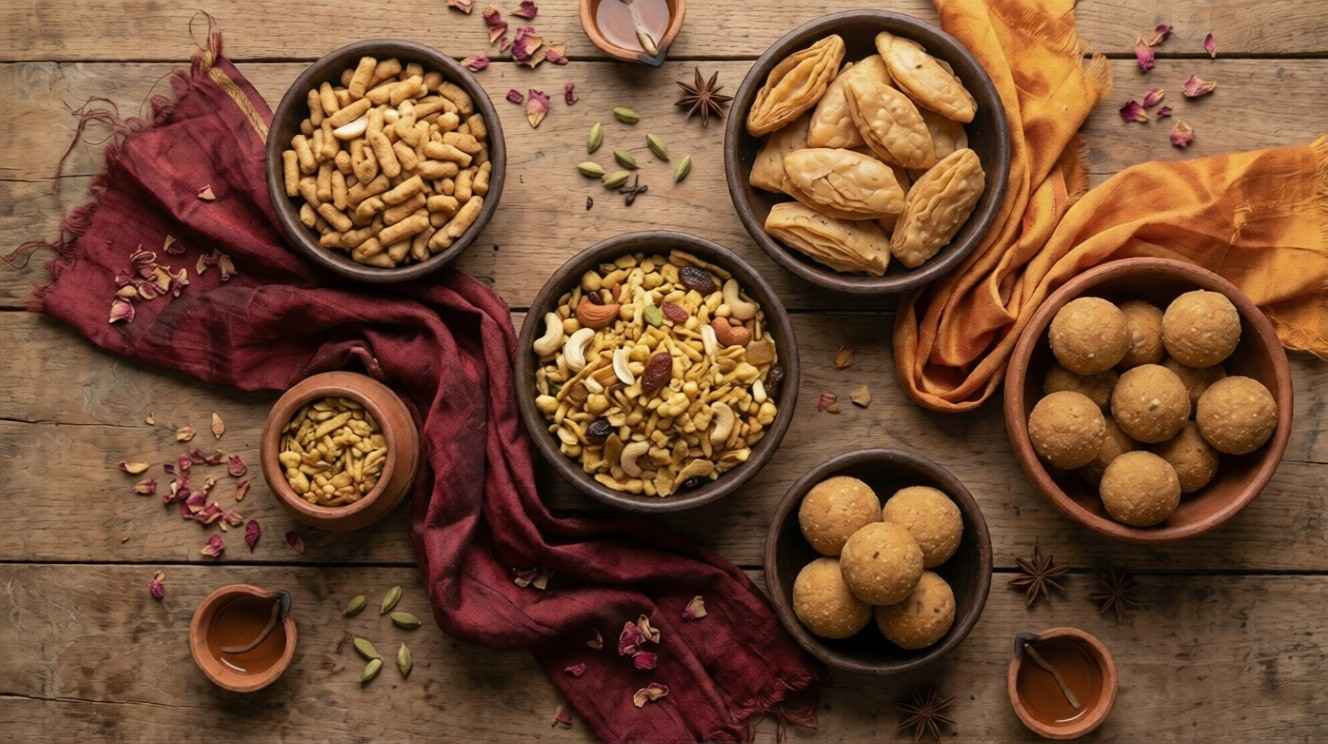
Every Indian festival carries with it the warmth of family, the sound of prayers, and the smell of something wonderful coming from the kitchen. Traditional festival snacks India has cherished for generations sit at the heart of every celebration. Whether it is Diwali, Holi, Navratri, or Eid, the kitchen becomes the most important room in the house.
Food is never just food during a festival. It is a way of saying I love you. It is the first thing families offer to guests and the last thing anyone remembers when the celebrations end. The taste of a well-made namkeen or a perfectly shaped sweet carries the memory of a grandmother’s hands, a mother’s patience, and a family gathered together.
These are not just recipes. They are traditions passed down quietly, one season at a time. In this blog, we explore the traditional festival snacks of India, why they matter, and how to keep that tradition alive in your home.
Why Traditional Festival Snacks India Hold Cultural Importance
Food and Festivity Go Hand in Hand
In India, food and culture have always moved together. Festivals mark the rhythm of the year, and the snacks during those festivals mark the rhythm of family life. Traditional festival snacks India has known for centuries are not simply things to eat. They are part of a living, breathing tradition.
When a mother prepares chakli or mathri for a festival, she does exactly what her mother did before her. Families rarely write these recipes down. They live in memory, in the movement of hands, in the feel of dough, and in the smell of oil heating on a stove. That is how they survive.
The Emotional Connection Behind Every Bite
Food also creates a language of belonging. When you offer someone a piece of khaja or a handful of mixture, you welcome them into your home and your celebration. Indian festive food builds bridges between people, between generations, and between communities.
The emotional connection people hold for these snacks is real and lasting. Many people will tell you that a certain sweet or namkeen reminds them of a specific festival, a particular relative, or a time in their childhood. That kind of memory is the true value of authentic Indian festive food.
Traditional Snacks Served During Diwali
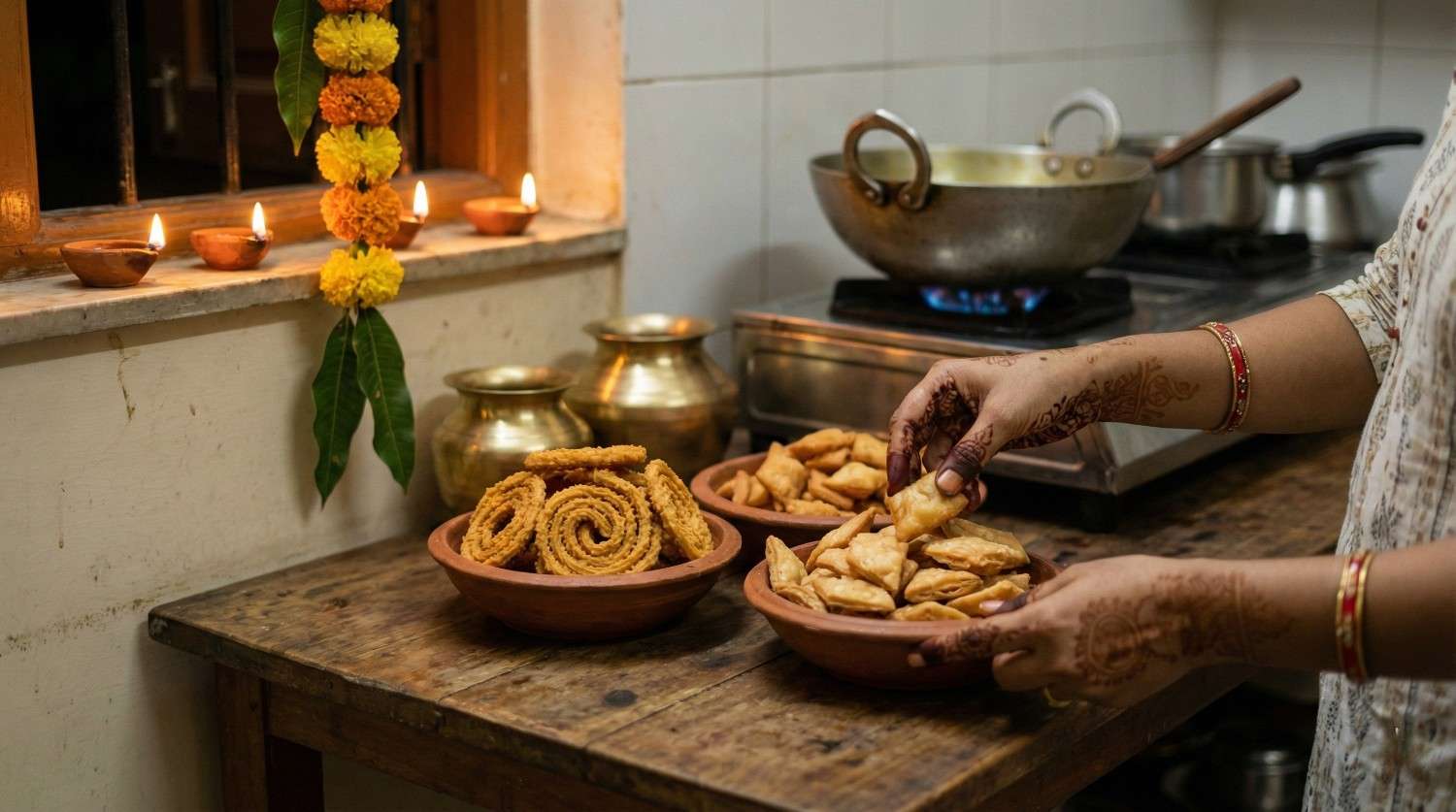
Diwali is perhaps the most celebrated festival in India, and the variety of snacks families prepare for it reflects that. Snacks for Diwali and Holi differ slightly in character, but both carry the same spirit of abundance and generosity.
During Diwali, namkeen takes centre stage. Households prepare or purchase a wide range of savoury snacks to serve with chai and to fill gift boxes. Atta Namkeen Puri is one such favourite. Cooks make it from whole wheat flour, lightly spice it, and fry it to a golden crisp. It is simple, satisfying, and the kind of snack that disappears quickly from any plate.
Sweets hold equal importance during Diwali. Families prepare ladoo in its many forms, besan barfi, and the beloved Khaja with great care. Khaja, a layered, flaky sweet from flour and sugar, has a texture unlike anything else. It is crisp on the outside and soft within, and it pairs beautifully with the savoury snacks on the Diwali thali.
The act of sharing these snacks is itself a tradition. Families prepare large batches and distribute them to neighbours, relatives, and friends. The giving of homemade snacks is a gesture of goodwill. It says that you took the time, and that the person receiving them is worth that time.
Popular Snacks for Holi and Other Festivals
Holi is a festival of colour and community. The snacks during Holi tend to be hearty and easy to share in large quantities. When neighbours and friends arrive at the door, coloured and laughing, the table should always be ready.
Mathri is a firm favourite at Holi. Cooks make these small, disc-shaped, crispy snacks from plain flour, carom seeds, and a touch of ghee. They are simple, but their flavour is deeply satisfying. They hold well for several days, which makes them ideal for advance preparation.
Chivda Mixture is another staple during Holi and other major festivals. A good Chivda Mixture brings together puffed rice, sev, peanuts, curry leaves, and spices into a blend that is hard to put down. It is the kind of snack that keeps a gathering going for hours.
Gujiya-style snacks, filled with sweetened khoya and dry fruits, are also closely associated with Holi. Navratri brings its own set of fasting-friendly snacks. Eid calls for sheer khurma and different varieties of savoury bites. Each festival has a distinct identity, and its snacks help define that identity.
The tradition of homemade festive snacks runs strongest in smaller towns and villages, where families set aside entire days to prepare. In cities, the pace of life has made it harder, but the love for these snacks remains unchanged.
What Makes Authentic Indian Festival Snacks Special?
The answer is simple: the way families make them. Nobody rushes authentic Indian festive food. Skilled hands prepare it with attention, with the right ingredients, and with a deep respect for how things have always been done.
Handmade preparation makes a difference you can taste. When someone kneads dough by hand, measures spices by feel, and fries slowly over the right heat, the result is a snack with depth and character. It does not taste like something a machine produced in a hurry.
The ingredients matter greatly as well. Traditional festival snacks use familiar, wholesome ingredients. Whole wheat flour, besan, rice flour, good quality oil, fresh spices, and natural sweeteners form the building blocks of Indian festival snacks. There are no unfamiliar additives, no artificial flavours that do not belong.
Nobody can easily manufacture home-style taste. It comes from the accumulation of small decisions: how much salt, how long in the oil, how much spice. Experienced hands make these decisions instinctively, producing the taste people associate with a good festival snack.
Slow frying is another defining feature. Snacks that fry at the right temperature, not too high and not too low, develop an even colour and a satisfying crunch. Rushing this process always shows in the final result. Good festive namkeen rewards the patience it requires.
How to Choose the Right Traditional Festival Snacks India for Your Family
When buying traditional festival snacks rather than making them at home, a few things deserve careful attention.
Ingredient transparency is the first thing to look for. A trusted brand or producer will always tell you what goes into the snack. If the ingredient list is short, familiar, and free of anything you do not recognise, that is a good sign. Traditional Indian snacks do not need long lists of additives to taste good.
Freshness matters equally. Look for a clearly marked production date, and check that the snack smells and feels fresh when you open the pack. A stale namkeen or an old sweet is not worth serving, regardless of how attractive the packaging looks.
Taste consistency matters for families who celebrate the same festivals year after year. When you find a snack your family enjoys, you want that experience to repeat the next time you buy it. This consistency comes from careful, traditional preparation methods that never cut corners.
Finally, trust the brands that have been making these snacks for a long time. A producer with a reputation built over years is more likely to respect the tradition behind the snack. Festive namkeen India trusts is often the kind that makers have prepared the same way for decades.
The Role of Namkeen and Sweets in Strengthening Family Bonds
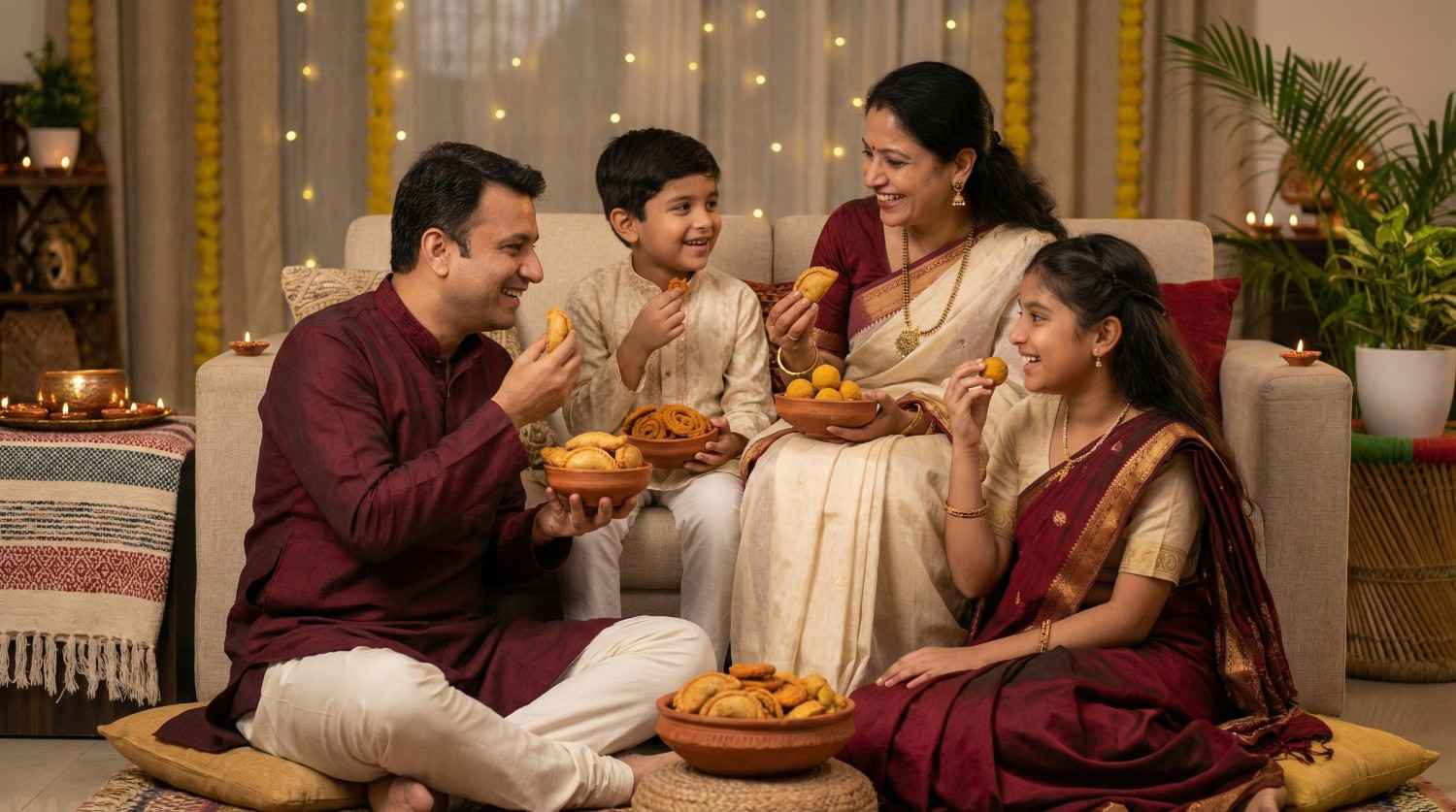
Something about preparing and sharing food brings people closer. It may be the most ordinary and most profound thing families do together. During festivals, people feel this more strongly than at any other time.
When a grandmother sits and shapes mathri while her grandchildren watch, something passes between them. Not just a recipe. A way of being together. A sense that some things are worth doing slowly and carefully.
The festival table, covered with dishes of savoury namkeen, platters of sweets, and cups of chai, becomes a place where conversations flow naturally. Arguments step aside. Differences feel smaller. The shared pleasure of good food creates an ease between people that few other things can match.
Indian sweets for festivals carry particular emotional weight. Families give them as gifts, offer them to guests, and distribute them to neighbours. Each piece carries a small message of warmth and goodwill. This tradition has survived centuries because it speaks to something very human.
Home-style festival snacks, whether families make them from scratch or source them from a trusted maker, keep this tradition alive. They connect the present moment to a long line of celebrations that came before. And they remind us that the simplest things, a crisp puri, a sweet ladoo, a bowl of mixture shared among friends, are often the most meaningful.
Traditional festival snacks in India are a wide variety of savoury and sweet foods prepared during major celebrations such as Diwali, Holi, Navratri, and Eid. These include namkeen varieties like mathri, chakli, and mixture, as well as sweets like ladoo, khaja, and barfi. They are deeply connected to Indian culture and are typically made using simple, wholesome ingredients following recipes passed down through generations.
During Diwali, the most popular snacks include various types of namkeen such as atta namkeen puri, mathri, and sev. On the sweeter side, ladoo, khaja, and besan barfi are widely prepared and shared. These snacks are made in large quantities and gifted to family, friends, and neighbours as part of the festive tradition. Sharing these snacks is considered an important gesture of goodwill and celebration during Diwali.
Namkeen is served during Indian festivals because it pairs well with festive sweets, balancing the overall spread of food. It is also practical as it stores well for several days and can be prepared in advance. More importantly, namkeen carries deep cultural significance. Serving savoury snacks to guests is a traditional form of hospitality in India, and the variety of festive namkeen available reflects the diversity and richness of Indian food traditions.
Historically, traditional festival snacks in India were entirely homemade. Families would spend days preparing namkeen and sweets before a major festival. While many households still follow this tradition, particularly in smaller towns, many people today also purchase snacks from trusted local makers or brands that use traditional preparation methods. The preference remains for snacks that taste homemade, with familiar ingredients and no unnecessary additives.
Most traditional Indian festival snacks last well when stored properly in airtight containers. Dry namkeen such as mathri, chakli, and mixture typically stay fresh for two to three weeks. Sweets vary depending on ingredients. Dry sweets like ladoo made from besan or atta can last up to two weeks, while moist sweets like kheer or gulab jamun should be consumed within a few days. Always check the production date when purchasing packaged festive snacks.
A Final Thought
Traditional festival snacks India has loved for generations are more than seasonal food. They are a thread that connects us to our families, our communities, and our shared history. Every bite of a well-made mathri or a perfectly crafted khaja carries something that cannot be easily described. It simply feels like home.
As the festival season approaches, whether you choose to prepare these snacks yourself or seek them from a maker you trust, hold on to the spirit behind them. Prepare them with care. Share them generously. Let them be a reason to sit together a little longer.That is what festive snacks have always been for.
