

How Food Connects Body, Mind, and Spirit in Indian Thought
In Indian tradition, food has never been simply about satisfying hunger. The idea that food connects body, mind, and spirit in Indian thought runs through thousands of years of scripture, medicine, and daily practice. From the hymns of the Vedas to the structured wisdom of Ayurveda, Indian culture has consistently viewed what we eat as something that shapes not just our physical health but the quality of our thoughts and the steadiness of our inner life. This is not abstract philosophy. It is a practical understanding that ordinary families once carried into their kitchens every day — in the way they prepared meals, in the prayers offered before eating, and in the quiet discipline of portion and timing.
The Ancient Indian View of Food and Consciousness
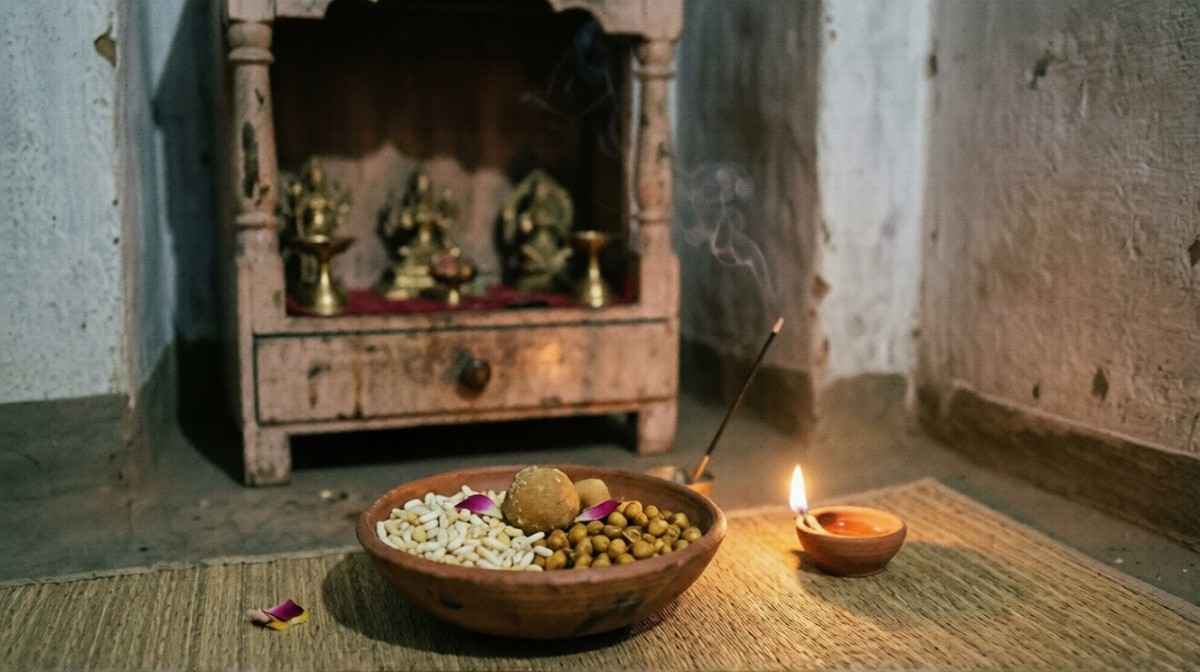
Sanskrit literature uses the word Anna to mean food, and the Taittiriya Upanishad opens a profound line of inquiry with the phrase “Annam Brahma” — food is the source of all existence. This is not a poetic exaggeration. The text describes how the physical body itself is formed from food, sustained by food, and returns to the earth as food. What we consume becomes us, in the most literal sense.
Beyond the body, Indian thought has long held that food influences the mind. The Chandogya Upanishad draws a direct connection between the subtlest part of what we eat and the quality of our thinking. It suggests that when food is pure, thought becomes clearer. This was not presented as mystical belief but as observed fact — the kind of understanding that comes from watching how people feel after different kinds of meals over a long period of time.
This connection between the material and the mental is foundational. The view is not that the body and mind are separate systems but that they form a continuum, and food is the thread running through both. Understanding this helps explain why so much of Indian food philosophy places equal weight on digestion, emotion, and spiritual clarity.
The Concept of Satvik, Rajasic, and Tamasic Food
Perhaps the most widely referenced framework for understanding how food connects body, mind, and spirit in Indian thought comes from the Bhagavad Gita. In Chapter 17, Krishna describes three categories of food that correspond to three qualities of nature — Sattva, Rajas, and Tamas.
Satvik food includes items that are fresh, lightly cooked, nourishing, and naturally sweet or mild. Fruits, vegetables, grains, dairy, nuts, and legumes prepared simply fall into this category. Satvik food meaning goes beyond the ingredients themselves — it also refers to the intention and cleanliness with which food is prepared. According to the Gita, Satvik food promotes clarity, strength, health, and a calm temperament. It supports sustained energy without agitation.
Rajasic food is associated with qualities of activity, passion, and stimulation. Spicy, heavily salted, bitter, and excessively rich foods fall here. So do foods eaten too quickly or in excessive quantities. Rajasic eating is not considered harmful in small measure — it fuels ambition and effort — but in excess, it tends to create restlessness, irritability, and difficulty settling the mind.
Tamasic food refers to items that are stale, overprocessed, fermented beyond a point, or heavy in a way that dulls the senses. The Gita associates Tamasic food with lethargy, dullness, and a heaviness that is difficult to shake. Overeating, eating at wrong hours, or consuming food that has lost its freshness are also considered Tamasic in effect.
These categories are not meant as rigid rules. They are observational tools — a way of noticing how different food choices affect your energy, mood, and focus over time. The insight embedded in these Bhagavad Gita food categories remains quietly relevant even today.
Ayurvedic Perspective on Food and Balance
Ayurveda, India’s classical system of medicine, approaches food through the lens of individual constitution. Every person is understood to have a dominant combination of three doshas — Vata, Pitta, and Kapha — which govern how the body processes energy, digestion, and temperament. Ayurvedic food principles begin with the recognition that the same food can be beneficial for one person and disruptive for another.
Central to Ayurvedic thinking is the concept of Agni, the digestive fire. Strong Agni means food is properly transformed into nourishment that supports tissue, immunity, and mental clarity. When Agni is weak or irregular — often because of poor food timing, incompatible food combinations, or emotional disturbance — the body accumulates Ama, or undigested residue, which is considered a root cause of illness.
Ayurvedic food principles emphasize simplicity: eat when genuinely hungry, eat warm or freshly cooked food when possible, rest briefly after a meal to allow digestion to begin, and avoid eating when stressed or distracted. These are not complicated prescriptions. They are habits that help the body do what it naturally wants to do.
The tradition also places importance on eating in accordance with the seasons and the time of day. The midday meal, when the sun is highest and Pitta energy naturally peaks, is considered the best time for the largest and most complex meal. This aligns Ayurvedic food principles with a broader philosophy: that the body works best when it moves in rhythm with the natural world.
Why Mindful Eating Is Rooted in Indian Culture

Long before the phrase “mindful eating” entered wellness conversations, Indian households practiced something very close to it — not as a conscious technique but as ordinary custom.
In most traditional homes, the meal began with a brief prayer or expression of gratitude. Food was offered symbolically to the divine before being consumed. This pause was not merely ritual. It created a moment of stillness before eating — a transition from whatever activity had come before. It slowed the pace and signaled to the body that nourishment was about to be received.
Eating together as a family was understood to be part of the meal itself. Conversation, sharing, and a sense of togetherness were not distractions from eating but companions to it. There was also a cultural respect for not wasting food. In many traditions, leaving food on the plate without necessity was considered discourteous — not just to the person who prepared it but to the effort that went into growing and cooking it.
Mindful eating in Indian culture was also shaped by the practice of sitting on the floor during meals, a posture that supports digestion and naturally prevents overeating by making the body more attentive to signals of fullness. These habits were passed down through generations not as health advice but as simply the way things were done — and in that ordinariness lay their quiet effectiveness.
The Role of Simple Traditional Snacks in Daily Balance
Indian food philosophy does not ignore the in-between hours. Light snacking in the early evening has long been a part of the daily rhythm, particularly in the context of physical work and active family life. The snacks that arose from this tradition were not casual afterthoughts. They were rooted in the same principles of balance, moderation, and nourishment.
A piece of Atta Namkeen made from whole wheat and minimal oil represents exactly this philosophy — familiar in taste, moderate in portion, and made from ingredients that do not burden the digestive system. Similarly, a small portion of traditional Chivda Mixture offers a blend of textures and flavors that satisfies without excess. These snacks were home-style by nature, made in measured quantities, and eaten as a bridge between meals rather than a replacement for them.
Even something as simple as a sesame-based Peanut Til Ladoo carries nutritional intentionality — sesame seeds have been valued in Ayurveda for their warming properties and their support of bone and joint health, while peanuts provide steady energy. The combination is not accidental. It is the quiet expression of a food culture that understood nourishment in its fullest sense.
Relevance of These Teachings in Modern Life
Modern life has drifted considerably from these foundations. Overprocessed food dominates much of what is available and convenient. Eating has become faster, more solitary, and increasingly disconnected from the rhythms that Indian food philosophy once considered essential.
The result is familiar: irregular energy, difficulty concentrating, disrupted sleep, and a persistent sense that the body is working against itself rather than with it. None of this is surprising when viewed through the lens of Indian food philosophy. The frameworks developed over centuries in scriptures, Ayurvedic texts, and household tradition were built to address exactly these imbalances.
Returning to these teachings does not require a dramatic overhaul of daily life. It may begin with something as simple as eating at a consistent time, choosing fresher and less processed ingredients, or pausing for a moment before a meal. Food connects body, mind, and spirit in Indian thought not through grand ritual but through the accumulated effect of small, consistent choices.
The wisdom that food connects body, mind, and spirit in Indian thought is not locked away in ancient texts. Much of it still lives in the recipes, habits, and customs that families carry forward — and in the quiet intelligence of a food culture that never separated nourishment from meaning.
