

What the Bhagavad Gita Teaches About Food Habits
The Bhagavad Gita is a manual for the soul. It offers guidance on duty and devotion. However, its most practical lessons involve our physical health. One key lesson involves Bhagavad Gita food habits. This philosophy suggests that food does more than fuel the body. It actually shapes our consciousness. In Indian spiritual food philosophy, eating is a sacred act. We offer food to the internal fire of digestion. This process influences our mental clarity and emotional peace.
Our relationship with food reflects our internal state. Modern diets focus on calories or nutrients. The Gita focuses on the quality of sustenance instead. By studying Bhagavad Gita food habits, we see how food dictates our temperament. Food can make us feel calm or restless. Ancient wisdom provides a timeless framework for healthy living. It helps us find a balanced approach to nourishment today.
Food and Human Nature in the Bhagavad Gita
Chapter 17 of the Bhagavad Gita explains human nature through three qualities. These qualities are the Gunas. They are Sattva (purity), Rajas (passion), and Tamas (ignorance). This classification is the basis for food according to Bhagavad Gita. Every person has a blend of these three forces. Our food choices reflect our dominant Guna.
There is a cycle between the mind and the plate. A serene person chooses pure foods. A restless person seeks spicy or stimulating foods. By changing our Bhagavad Gita food habits, we can change our mindset. We should choose a Satvik diet for higher consciousness. This quality supports the clarity we need for meditation. It also helps us live an ethical life.
Satvik Food According to the Bhagavad Gita
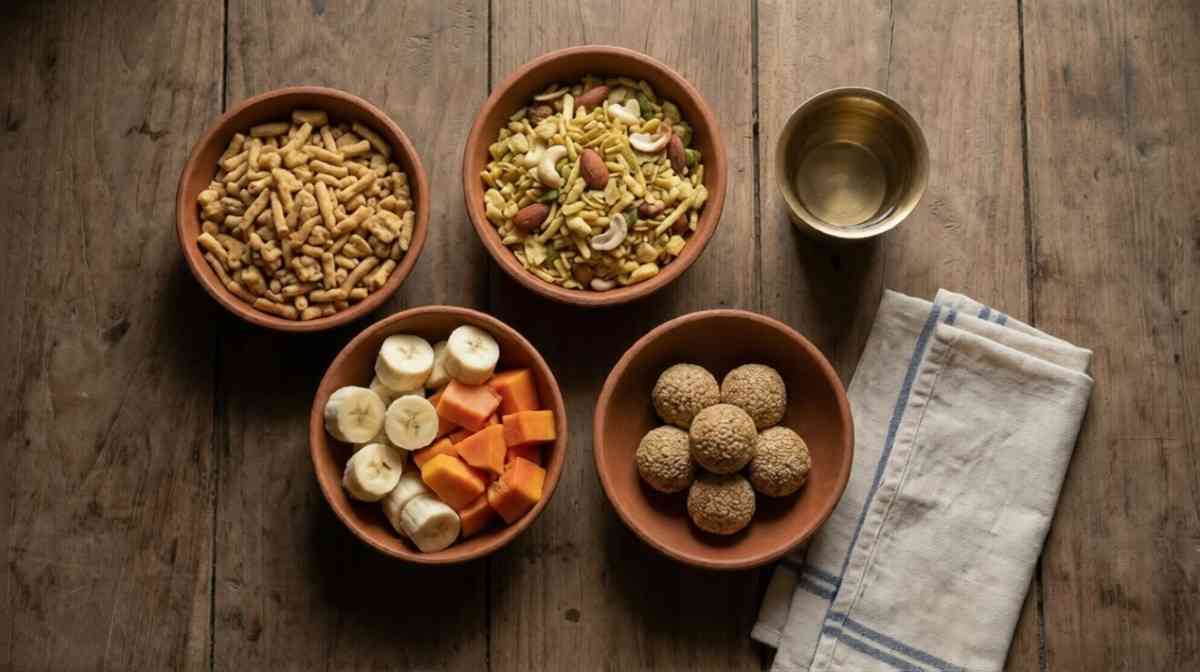
Satvik food in Bhagavad Gita is the best dietary choice. These foods increase our lifespan and purify our hearts. They give us strength, health, and satisfaction. But what is a Satvik meal? The scripture says these foods are juicy and nourishing. They are substantial and pleasing to the mind.
This diet includes fresh fruits and seasonal vegetables. It also includes whole grains and nuts. Freshness is very important here. You should eat a Satvik meal shortly after cooking it. This diet nourishes the body without causing stress. It keeps the mind alert and calm. In mindful eating in Hindu tradition, Satvik food is a tool for long life. It is about more than avoiding meat. It is about eating life-force energy.
Rajasic and Tamasic Food Explained
We lose balance when we eat Rajasic and Tamasic food. The Gita describes Rajasic foods as very bitter or sour. They are often too salty or pungent. These are the foods of passion. They give quick energy but cause distress. Modern examples include caffeine and very spicy dishes. A person eating Rajasic food often feels restless. Their body may suffer from inflammation.
Tamasic food is the opposite of pure food. These foods are stale and tasteless. They are often processed or impure. Bhagavad Gita food habits discourage these choices. Tamasic food causes lethargy and ignorance. It drains our motivation. “Dead” food lacks nutritional integrity. It makes us feel heavy and cloudy. This explains why processed snacks leave us feeling tired.
Why Moderation and Discipline Matter in Indian Food Philosophy

The Bhagavad Gita teaches the “Middle Path.” It says yoga is not for those who eat too much. It is also not for those who starve themselves. This is the principle of Mitahara. It is a vital part of traditional Indian food habits. Discipline is not about suffering. it is about self-regulation. We must keep the body fit for the mind.
Mindfulness starts before we eat. In India, people often say a prayer before meals. This expresses gratitude for the food. It makes eating a spiritual act. We avoid physical discomfort through moderation. We also avoid the mental dullness that follows a heavy meal. This discipline saves our energy for creative work. It ensures we do not waste energy on heavy digestion.
Relevance of Bhagavad Gita Food Habits in Modern Life
The wisdom of Bhagavad Gita food habits is vital today. We live in a world of “convenience food.” These products are often Tamasic. They have long shelf lives but no fresh nutrients. Distracted eating is a common problem now. Many people scroll through phones while they dine. This is the opposite of mindful eating in Hindu tradition.
We must reclaim our relationship with food. The Gita encourages us to slow down. We should choose quality over speed. Fresh, whole ingredients improve mental health. They also improve physical health. These ancient principles fight stress and fatigue. They help us find balance in a busy world.
Traditional Indian Eating Habits That Reflect Gita’s Teachings
Many traditional Indian food habits follow the Gita. Home-cooked meals ensure fresh ingredients. They are also made with love and care. Indian snacks often use whole grains and seeds. You can enjoy a simple Atta Namkeen for healthy energy. A traditional Chivda Mixture is another great choice. These snacks are better than ultra-processed food.
Seasonality is also key to this lifestyle. Eating seasonal food ensures it is Satvik. Many people use warming ingredients like sesame. A sesame-based Peanut Til Ladoo is perfect for certain seasons. These habits show that Bhagavad Gita food habits are practical. They are part of a rich culinary heritage. They promote a sustainable and healthy lifestyle.
