

North Indian Temple Fairs and Namkeen: A Tradition Rooted in Faith and Flavor
Across the towns and villages of North India, temple fairs have been part of life for centuries. These gatherings, known as melas, bring together thousands of people in a spirit of devotion, community, and celebration. At the heart of every such fair, food plays an important role. And among all the foods found at these events, namkeen holds a special place. The connection between North Indian temple fairs and namkeen runs deeper than commerce. It speaks to faith, generosity, and the simple joy of sharing something good with the people around you.
Walk through any temple mela in Uttar Pradesh, Rajasthan, Madhya Pradesh, or Bihar, and the smell of freshly fried snacks greets you before anything else. Vendors line the paths leading to temple gates. Families move through the crowds with small paper cones of sev or mathri in their hands. Children reach for namkeen as naturally as they reach for a blessing. This is the landscape of Indian religious fairs food, and it has looked much the same for generations.
What Are Temple Fairs in North India?
Temple fairs in North India are annual or seasonal gatherings that centre around a place of worship. They mark important days in the Hindu calendar, such as the birth anniversary of a deity, a seasonal transition, or a regional festival. Fairs gather at temples dedicated to Ram, Krishna, Shiva, Durga, and many local deities whose names and stories vary from one district to the next.
These fairs are far more than religious events. They serve as community gatherings where people from surrounding villages come together, often after months of separation. Farmers, artisans, traders, and families travel long distances to attend. Temple fairs in North India become temporary towns, filled with stalls, music, animals, and the constant movement of pilgrims.
The cultural importance of these melas is difficult to overstate. They preserve oral traditions, folk arts, and food practices that might otherwise fade. For many communities, the annual temple fair is the single most important social event of the year. It brings together the sacred and the everyday in a way that few other occasions can match.
Why Food Is Central to Temple Fairs
In Indian religious tradition, food and devotion have always moved together. Offerings of food to a deity, known as prasad, form one of the most sacred acts a devotee can perform. Temple prasad traditions teach that food prepared with a pure heart and offered to the divine becomes blessed. When that prasad reaches the hands of a devotee, it carries the goodwill of the offering itself.
At temple fairs, this relationship between food and faith expands beyond the inner sanctum. The act of feeding others becomes an extension of devotion. Community kitchens distribute simple cooked meals to all who come, regardless of background. Families bring home-prepared food to share with strangers. Vendors offer their wares not just for profit but as part of the social fabric of the fair.
Food as a Bond Between Strangers
Shared meals at temple fairs create a unique kind of equality. When people sit together and eat the same food, differences of region and background soften. This is one of the oldest and most powerful functions of Indian festival food traditions. Food becomes the medium through which community bonds itself, again and again, year after year.
The foods found at these fairs are deliberately accessible. They are affordable, easy to carry, and require no preparation from the person receiving them. This is precisely where namkeen steps in.
The Role of Namkeen in North Indian Temple Fairs and Namkeen Traditions
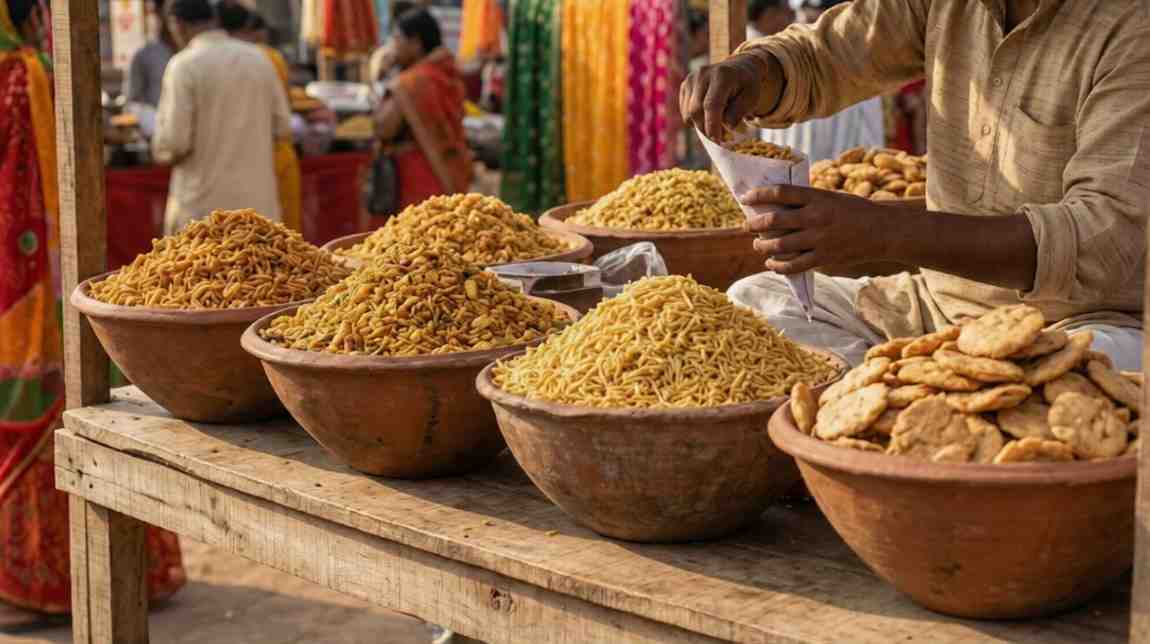
Namkeen has qualities that make it especially well suited to the environment of a temple fair. It needs no refrigeration. It travels well. A single batch, prepared a day or two in advance, stays fresh and crisp throughout the duration of the fair. These practical qualities have made traditional namkeen India trusts across generations the natural snack of large religious gatherings.
Beyond practicality, namkeen carries cultural familiarity. Every region of North India has its own version of a dry, savoury snack. People recognise these flavours from childhood. They associate them with good times, with family visits, and with the smell of ghee and spices drifting from a grandmother’s kitchen. When someone offers you namkeen at a temple fair, it feels like a gesture from home.
Why Namkeen Is Easy to Share
The shareable nature of namkeen is another reason for its prominence at melas. Unlike cooked food, it does not need to reach the recipient hot or immediately. Vendors can fill small bags or paper cones quickly and efficiently. Families carry it in their pockets and offer it to whoever they meet along the way. This ease of sharing fits perfectly with the spirit of temple fair culture, where generosity and hospitality flow naturally.
The connection between North Indian temple fairs and namkeen therefore grew from real needs and real values: the need to feed large numbers of people simply and well, and the deeply held value of offering something to others as an act of goodwill.
Popular Namkeen Found at Temple Fairs
The variety of snacks sold at temple fairs in North India reflects the regional diversity of the land. Each state and each fair has its own favourites, shaped by local ingredients, cooking traditions, and taste preferences.
Sev is among the most widely sold snacks at Indian religious fairs. Made from besan pressed through a mould and fried until golden, it is light, crispy, and deeply satisfying. Vendors fry it fresh in large kadais, and the aroma draws crowds from a distance. It appears in many forms, from thin and delicate to thick and heavily spiced.
Mathri, a flaky disc of fried dough seasoned with carom seeds and black pepper, is another staple of the temple fair. It holds its texture well for days, making it ideal for both selling and gifting. Many families purchase mathri at temple fairs and carry it home as a small edible memory of the occasion. A well-made traditional Atta Namkeen belongs to this same family of wholesome, uncomplicated snacks that have served temple gatherings for generations.
Mixture is perhaps the most beloved of all mela snacks. A good classic Chivda Mixture brings together several textures and flavours in one handful: puffed rice, fried gram, sev, peanuts, and a blend of spices that varies from maker to maker. It is the kind of snack people return to again and again, reaching into the bag long after they intended to stop.
In certain regions of Uttar Pradesh and Bihar, sweeter fried items appear alongside the savoury. The festive Puri Khaja is one such example. Layered, crisp, and lightly sweetened, khaja occupies a space between namkeen and mithai. At larger temple fairs, it appears alongside savoury snacks as part of the broader spread of authentic Indian namkeen.
Roasted chana, boiled chickpeas with spices, and fried papdi complete the spread at most melas. Together, these snacks form a living catalogue of authentic Indian namkeen that endures not because of marketing, but because of real, repeated love.
How Temple Fair Traditions Influenced Indian Snack Culture
The snacks that appear at temple fairs did not arrive there fully formed. They came from home kitchens, carried by the women who prepared them and the families who sold them. Over time, small-batch home preparation gave way to slightly larger batches for the fair stall. The principles, however, stayed the same: simple ingredients, familiar spices, and honest frying.
This continuity between home kitchen and fair stall is one of the reasons authentic Indian namkeen tastes the way it does. There is no industrial logic behind the flavour. The taste comes from a person’s decisions: how long to fry, how much salt, which spices to blend. Temple fair vendors who built reputations over decades did so because their namkeen tasted like something a careful home cook would make.
Indian festival food traditions, shaped and carried by these fairs, filtered back into everyday home cooking. Families who tasted a particular mixture or mathri at a mela tried to recreate it at home. Recipes passed from vendor to customer, from generation to generation, through the simple act of eating together in a crowded, joyful place.
The influence of temple fairs on Indian snack culture is a two-way conversation between the public and the private, between the communal and the domestic. The fair borrowed from the home kitchen, and the home kitchen learned from the fair.
From Temple Fairs to Modern Indian Homes
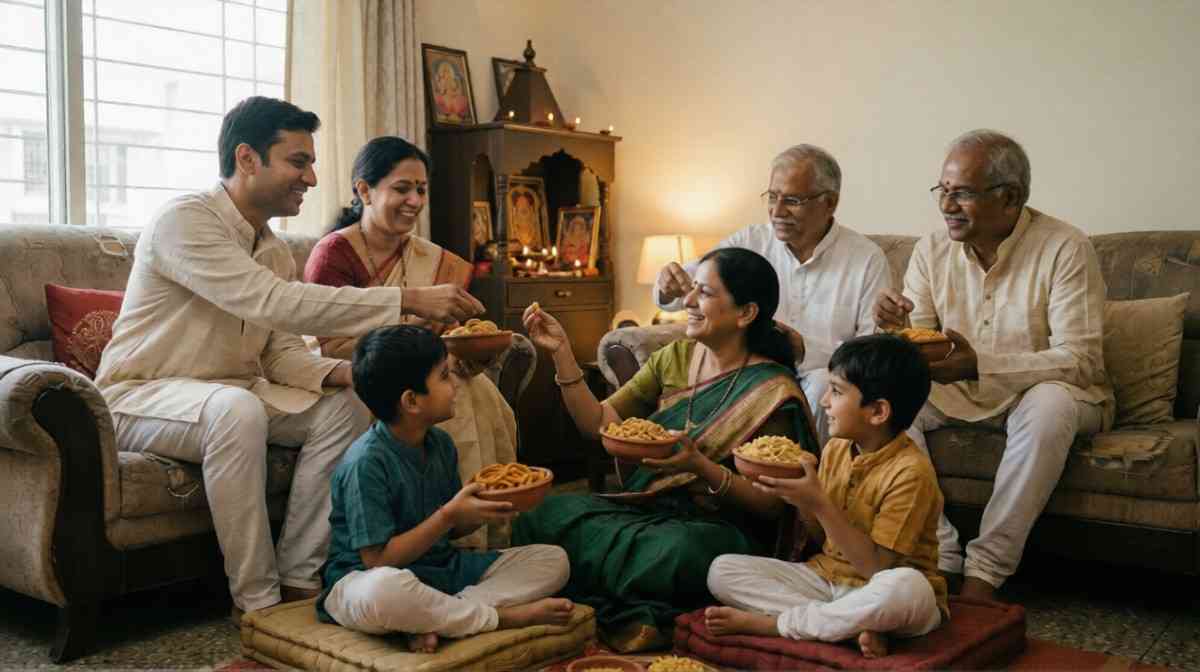
Today, fewer people attend temple fairs in the way their grandparents did. Urban life, distance, and changing schedules have altered the rhythms that once made the annual mela a fixed point in every family’s calendar. Yet the traditions those fairs carried have not disappeared. They live on in smaller, quieter ways.
Families still visit temples on auspicious days and return home with namkeen to share. The act of buying a packet of mathri or sev after a temple visit carries the same emotional meaning it always did. It is a small continuation of a large tradition: the idea that when you leave a sacred space, you bring something back for the people you love.
The bond between North Indian temple fairs and namkeen persists in family gatherings, in the snacks placed on the table during festivals, and in the taste preferences people carry without always knowing where they came from. When someone says a certain namkeen tastes right, what they often mean is that it tastes familiar, that it echoes something they have always known.
Traditional namkeen India has produced across generations is the edible memory of these occasions. It does not require a temple fair or a mela to be meaningful. It carries that meaning in itself, in its flavour, in its simplicity, and in the hands that made it.
A Closing Thought
The relationship between North Indian temple fairs and namkeen is one of the quieter, more enduring stories in Indian food culture. It does not make headlines. It does not need to. It lives in the texture of a well-fried mathri, in the crunch of sev handed to a stranger in a crowd, in the bag of mixture a grandmother carries home after a temple visit.
These small acts, repeated across centuries and across millions of families, are what tradition is made of. They ask nothing more than attention, care, and a willingness to share.
