

The Role of Snacks During Navratri Celebrations
Navratri is one of India’s most vibrant and spiritually charged festivals. Spanning nine nights of intense devotion, it celebrates the victory of Goddess Durga over the buffalo demon Mahishasura. Across the country, homes transform into spaces of prayer, music, and community. Central to these festivities is the unique culinary landscape that emerges during this time. The role of snacks during Navratri celebrations extends far beyond simple sustenance; these offerings represent a bridge between discipline and celebration, connecting the act of fasting with the joy of shared meals.
Whether it is a quiet evening of prayer at home or a high-energy dance gathering, food remains a focal point. During this period, millions of devotees observe various forms of fasting (vrat), which leads to the creation of specific Navratri fasting snacks. These treats are carefully prepared using pure, Satvik ingredients that adhere to ancient traditions. They provide the necessary energy for long hours of worship and dance while maintaining the spiritual purity required for the occasion. In a traditional Indian home, the preparation and sharing of these snacks become a way to express hospitality and devotion.
Understanding Navratri and Its Spiritual Significance
Navratri, meaning “nine nights,” is dedicated to the worship of the Divine Feminine. Each night honors a different form of the Mother Goddess, representing various virtues like strength, prosperity, and knowledge. The spiritual essence of the festival lies in the purification of the mind and body, which is why many practitioners choose to simplify their lifestyle and diet during these days.
While the core spiritual intent remains the same, the way Navratri is celebrated varies beautifully across India. In North India, devotees often observe strict fasts and participate in Jagratas. In Gujarat, the nights are filled with the rhythmic movements of Garba and Dandiya. In West Bengal, the final days culminate in the grand Durga Puja, where the community gathers in beautifully decorated pandals. Despite these regional differences, Indian festival snacks serve as a common thread, appearing in different forms but always carrying the same spirit of offering and community.
Why Food Traditions Matter During Navratri
Food traditions are deeply intertwined with the spiritual discipline of Navratri. For many, this is a time of vrat, or fasting, which is viewed as a way to cleanse the system and focus the mind on the Divine. This discipline requires a shift in the type of ingredients used in the kitchen. Grains like wheat and rice are often replaced with alternatives like buckwheat (kuttu) or water chestnut flour (singhara), and regular salt is replaced with rock salt (sendha namak).
The preparation of these meals is strictly Satvik. In Indian philosophy, Satvik food is that which is pure, fresh, and promotes a calm, clear mind. By following these Navratri food traditions, families ensure that their physical habits support their spiritual goals. Furthermore, the act of offering food as Navratri prasad transforms a simple snack into a blessed gift. When food is offered to the Goddess before it is consumed by the family, it becomes a symbol of gratitude and surrender.
Fasting Snacks and Satvik Choices During Navratri Celebrations
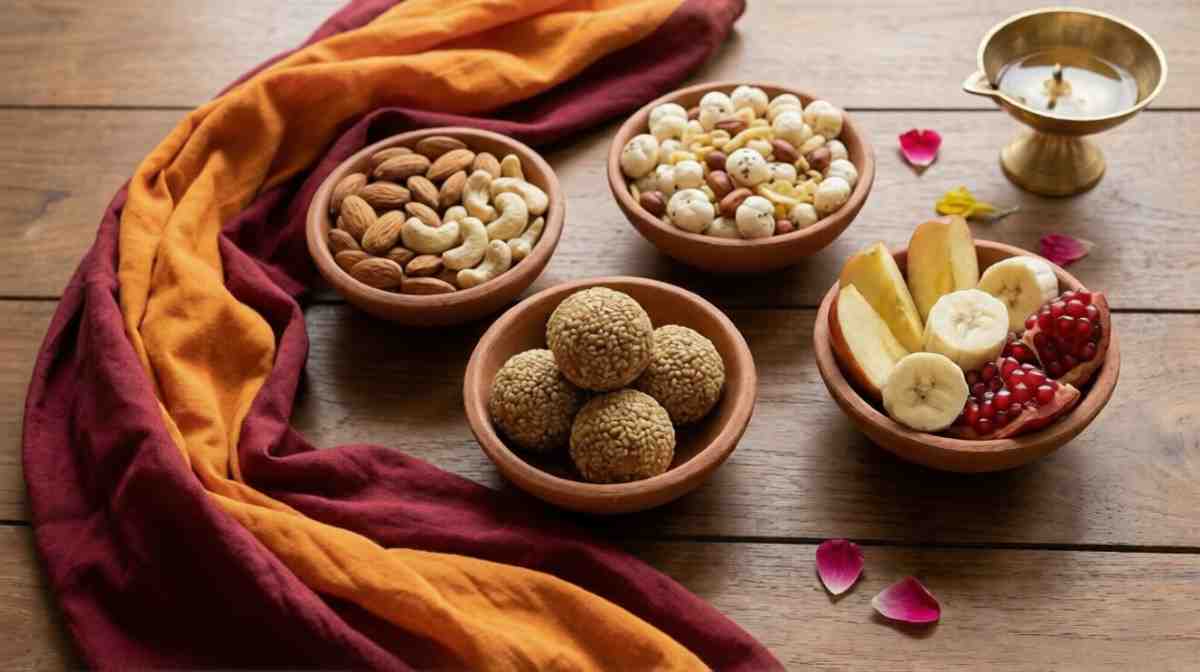
When discussing snacks during Navratri celebrations, the focus is often on light, nourishing options that satisfy hunger without causing lethargy. Because many devotees eat only one full meal a day or avoid heavy grains, snacks play a vital role in maintaining energy levels. Satvik snacks during Navratri typically include a variety of fruits, nuts, and tubers like potatoes or sweet potatoes.
Makhana (fox nuts), roasted peanuts, and sabudana (tapioca pearls) are staples in the Navratri pantry. These ingredients are versatile; they can be lightly roasted with a bit of ghee or turned into crispy fritters. The emphasis is always on balance and moderation. Even when preparing traditional snacks for Navratri, the goal is to provide nourishment that respects the body’s needs during a period of prayer. For those looking for a wholesome option that aligns with traditional textures, a light Atta Namkeen can be a comforting addition to the household table during the non-fasting hours or for family members who are not observing the strict vrat.
The Role of Snacks in Garba and Community Gatherings
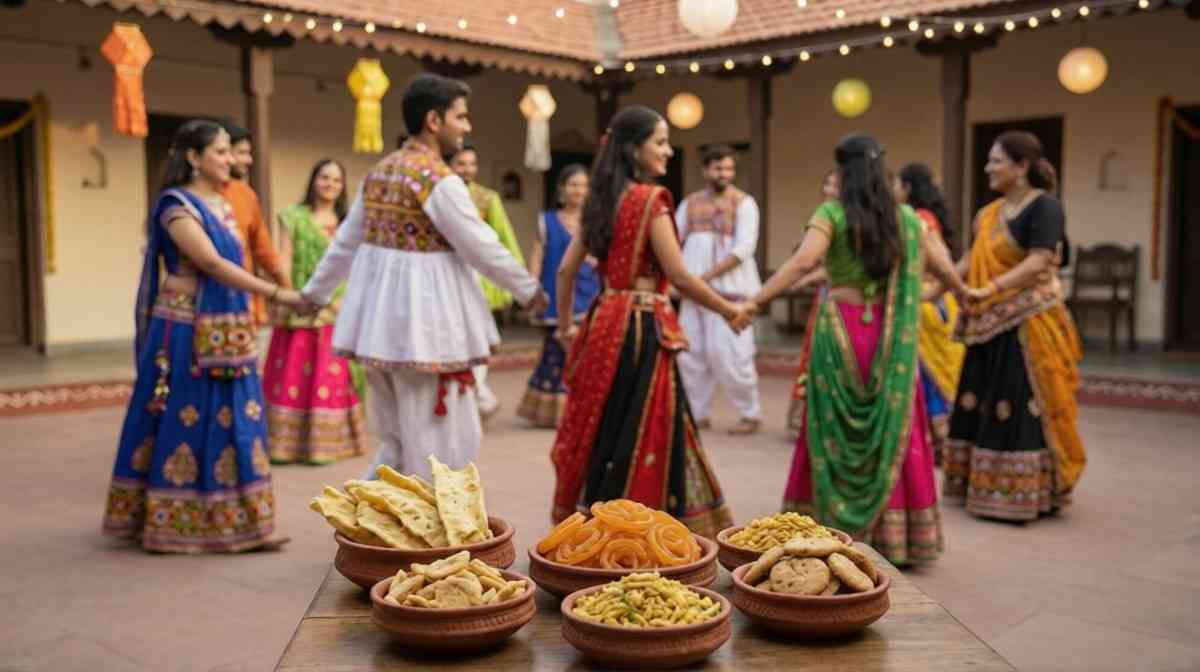
One of the most social aspects of Navratri is the community gathering, especially the famous Garba nights in Gujarat and across urban India. These events are physically demanding, involving hours of rhythmic dancing. Consequently, garba celebration food usually consists of light, portable snacks that can be shared easily among friends and neighbors.
After the evening Aarti, it is common for community centers or residential societies to set up small stalls or refreshment areas. Here, hospitality is paramount. Sharing a bowl of traditional Chivda Mixture or other savory nibbles becomes a way of bonding with the community. These moments of sharing help break the ice between neighbors and reinforce the social fabric. The snack is not just a food item; it is a gesture of welcome and a celebration of togetherness after a night of collective worship.
Traditional Snacks Served After Aarti and Prayers
The time immediately following the evening prayers is when the kitchen becomes the heart of the home. Once the lamps are lit and the hymns are sung, the family gathers to receive the prasad. This is often a mix of dry snacks and traditional sweets. Because these snacks need to last for several days, many households prepare them in large batches before the festival begins.
Commonly served items include sweets made from coconut, jaggery, or sesame. For instance, a sesame-based Peanut Til Ladoo is a frequent sight on prasad platters, offering a burst of energy and a sense of traditional sweetness. Sharing these snacks with neighbors is a long-standing tradition. It is believed that by distributing the food offered to the Goddess, one spreads her blessings and grace throughout the neighborhood. This practice of “giving” is as important as the act of “praying” during these nine holy nights.
How Navratri Food Traditions Strengthen Family Bonds
Navratri is a time when the entire family often comes together, particularly for the evening meals. For children, watching their parents and grandparents prepare special Navratri fasting snacks is a lesson in cultural continuity. These recipes are often passed down through generations, with each family having its own “secret” way of making a particular dish.
Eating together after a day of fasting creates a unique sense of solidarity. The effort put into home preparation ensures that the food is not only physically healthy but also emotionally fulfilling. In a world where fast food is becoming the norm, the dedicated preparation of Indian festival snacks at home reminds the younger generation of the value of patience, purity, and tradition. It is through these shared plates and collective rituals that family bonds are strengthened, ensuring that the essence of the festival remains alive for years to come.
